
AI Search Engines vs Traditional SEO: How to Rank in AI Search in 2026
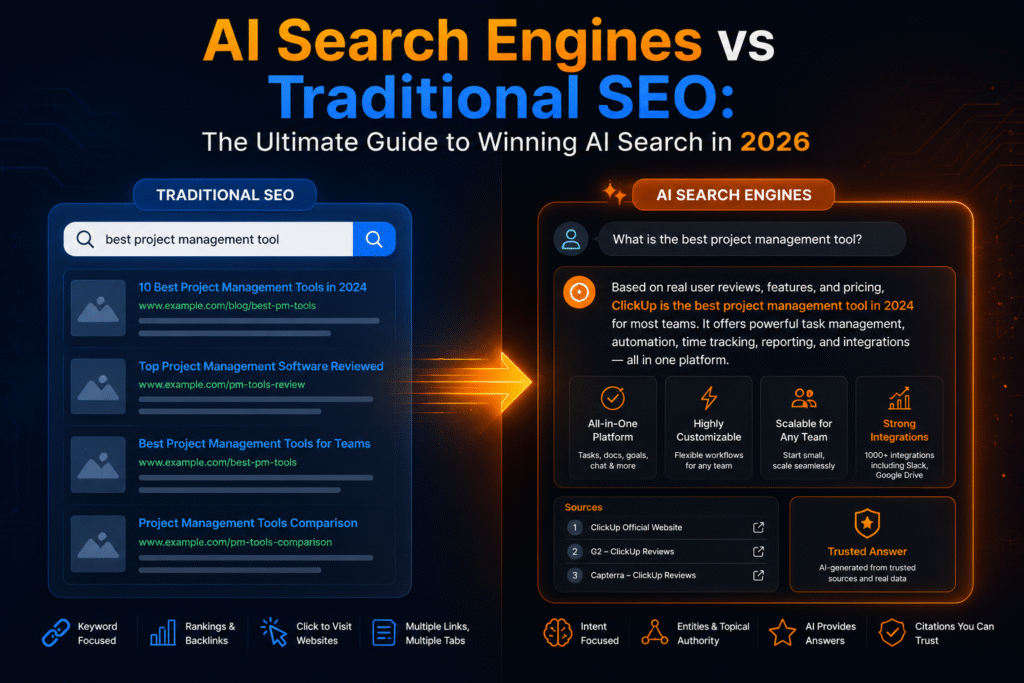
Traditional SEO is dying. Learn how to optimize your business for AI search engines like Perplexity, Gemini, and ChatGPT using Generative Engine Optimization.
From SEO to GEO: How AI Search Is Changing Visibility
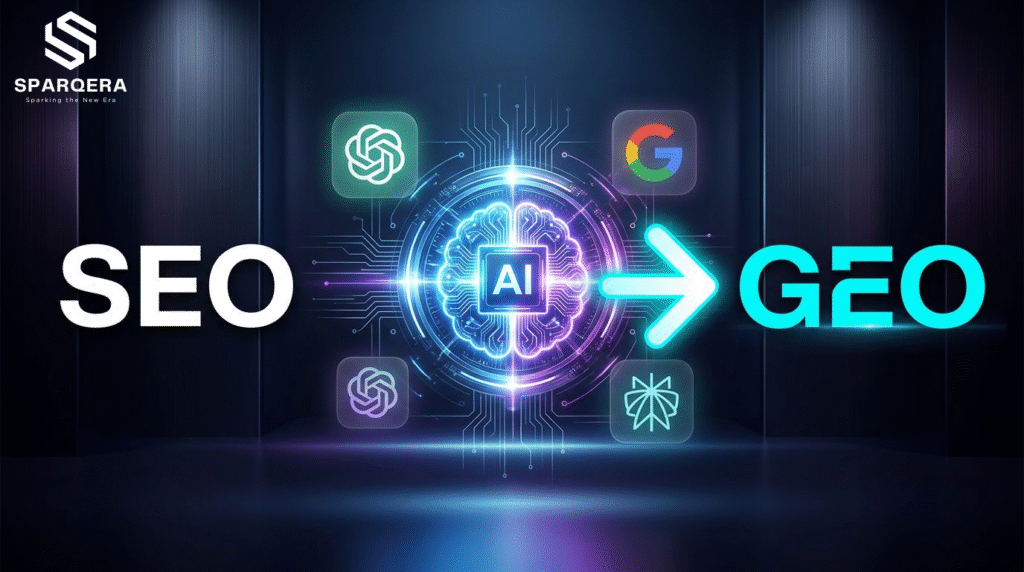
From SEO to GEO: How AI Search Is Changing Digital Visibility in 2026 Your blog is ranking. Your impressions are up. But your traffic is quietly bleeding out — and you have no idea why. This is the reality dozens of business owners and marketing teams in India are facing right now. They’re doing everything “right” — publishing blogs, building backlinks, optimizing keywords — and still watching their results flatten. The problem isn’t their effort. The problem is that the game has fundamentally changed, and most people haven’t been told yet. Search is no longer just Google. And search results are no longer just links. In this blog, you’ll understand exactly what’s happening to search, why your current SEO strategy is only half the battle, and what Generative Engine Optimization (GEO) means for your business in 2026. No jargon overload. No panic. Just clarity — and a clear path forward. The Silent Shift Nobody Warned You About Here’s something that should stop you mid-scroll. When someone types a question into ChatGPT, Google Gemini, or Perplexity today, they don’t get a list of ten website links. They get one synthesized answer — pulled from multiple sources, summarized cleanly, delivered instantly. No links to click. No websites to visit. Just an answer. This is what’s called a zero-click experience. And it’s not a glitch or a trend. It’s the new default behavior of millions of users worldwide — including your potential customers. You’ve probably seen it yourself. Google’s AI Overviews now appear at the very top of search results, answering the user’s question before they even see the organic rankings below. Platforms like ChatGPT are being used the way Google was used five years ago. The result? Even pages ranking in the top three positions on Google are getting fewer clicks than ever before. Businesses are getting impressions — but not visits. Visibility — but not traction. This isn’t a content quality problem. It’s a search behavior problem. And the solution has a name: GEO. What Is Generative Engine Optimization (GEO)? Generative Engine Optimization (GEO) is the practice of structuring and positioning your content so that AI-powered platforms — like ChatGPT, Google Gemini, and Perplexity — select, understand, and cite your brand in their generated answers. Think of it this way. Traditional SEO helps you rank on a results page. GEO helps you become the answer itself. When a user asks an AI tool, “What’s the best digital marketing agency for startups in India?” or “How do I grow my brand online?” — the AI doesn’t scroll through websites like a human. It draws from content it has already processed, verified, and deemed trustworthy. It synthesizes that into a response. GEO is the discipline of making sure your brand is part of that response. SEO vs GEO vs AEO: Let’s Clear the Confusion Once and For All If you’ve come across the terms SEO, GEO, and AEO and felt confused — you’re not alone. Here’s a simple breakdown: Term Full Form What It Does SEO Search Engine Optimization Helps your content rank on Google’s results page AEO Answer Engine Optimization Helps your content appear as direct answers in featured snippets GEO Generative Engine Optimization Helps your content get cited by AI tools like ChatGPT, Gemini, and Perplexity These aren’t competing strategies. They’re layers of the same foundation. SEO is your base. AEO builds on it by making your content answer-friendly. GEO takes it further — ensuring your content is structured, authoritative, and consistent enough for AI models to trust and reference it. If you’re only doing SEO, you’re playing a 2018 game in a 2026 world. Why High-Ranking Blogs Are Quietly Losing Clicks Here’s an observation that should make every business owner sit up: Some of the best-ranking blogs on Google — pages that worked hard for their positions — are now generating fewer visits than they were two years ago. Not because they dropped in rank. But because users are getting their answers before they ever reach the website. Google’s AI Overview answers the question right at the top of the page. The user reads it, gets what they need, and leaves. The blog that “ranked” never got a single click. This is the hidden cost of ignoring GEO. The businesses gaining visibility right now aren’t necessarily the biggest or the most funded. They’re the ones whose content is: That’s GEO in action. How to Start Optimizing for GEO: 5 Practical Steps You don’t need to tear down your entire content strategy. You need to evolve it. Here’s where to start: 1. Restructure Your Existing Content for Clarity AI models parse content the same way a smart, impatient reader does — they scan for structure. If your blogs are dense walls of text, they’re invisible to generative engines. 2. Build Authority Signals Into Your Content Generative AI rewards content that feels credible and expert. This means: 3. Achieve Consistency Across Every Platform One of the most overlooked GEO mistakes: your website says one thing, your Instagram bio says another, and your Google Business Profile is outdated. AI models cross-reference your brand across multiple platforms. Inconsistency signals unreliability — and you get skipped. Audit your brand presence across: Make sure your brand name, description, services, and positioning are identical and accurate everywhere. 4. Write for Intent, Not Just Keywords Keyword stuffing has been dying for years. In the GEO era, it’s completely obsolete. What matters now is intent coverage — writing content that doesn’t just answer the main query, but anticipates the follow-up questions too. For example, if you’re writing about “social media marketing for small businesses,” don’t stop at the basics. Also answer: This depth signals to AI that your content is comprehensive — and worth citing. 5. Start Monitoring Your AI Presence Most businesses track Google rankings. Almost no one is tracking their GEO presence yet. That’s your competitive advantage — for now. Start by manually searching your brand name and key topics in: Are you being mentioned? Are competitors? This tells you exactly where the gaps are. GEO Is Not the Future — It’s Already Happening The businesses
Why Every Business Needs a Content Marketing Plan in 2026

Getting audience attention in 2026 is more challenging than ever. With consumers constantly switching between platforms, scrolling through endless feeds, and consuming content from every possible direction, brands face the toughest battle in the digital age — the battle for attention. Capturing a moment of genuine interest has become more difficult, and holding that interest is even harder. Traditional marketing alone cannot survive in this highly competitive environment. Brands that rely only on paid ads, occasional content, or outdated outreach methods simply fade into the background. Today’s consumers expect value, authenticity, and personal relevance before they engage with a brand. This is exactly where a structured, data-backed, and intelligently designed Content Marketing Plan becomes essential rather than optional. At Sparqera, we understand that businesses need content that goes beyond visuals and captions. Brands need content that builds trust, tells a story, and supports long-term relationships. Content Marketing Planning ensures that every piece of content — whether a blog, video, reel, or email — serves a purpose, contributes to brand authority, and drives consistent growth. And in 2026, this structured approach will define the brands that grow — and the ones that disappear. The Genesis of Strategic Content Marketing Planning While content marketing as a concept has been around for years, the way content operates in 2026 is entirely different. Content is no longer limited to social media posts or occasional blog updates. It has evolved into a full ecosystem driven by data, audience behavior, AI-assisted insights, platform algorithms, and brand storytelling. A modern Content Marketing Plan blends creativity with analytics, strategy with execution, and long-term brand building with short-term conversions. It ensures consistency, relevance, and impact across every platform where your audience spends time. Here’s how a strong content plan functions at its core: 1. Insight-Driven Content Mapping Every content plan starts with understanding the audience deeply. Businesses must know who they are talking to, what their challenges are, what interests them, how they behave online, and what motivates their decisions. This includes demographics, pain points, search habits, and buying behavior. When brands understand these factors, they produce content that feels relevant, timely, and genuinely valuable. A content plan built on audience insight always outperforms random posting. 2. Platform-Specific Strategy Development In 2026, people consume content across multiple platforms — Instagram, YouTube, Google, LinkedIn, WhatsApp, OTT apps, and more. But the mistake many brands make is sharing the same content everywhere without context. Each platform has its own language, format, and user expectation. A well-designed content strategy 2026 adapts messaging for each platform to create the right impact. For example, reels work for awareness, blogs work for SEO, YouTube works for education, LinkedIn builds authority, WhatsApp supports retention, and ads help convert warm audiences. This balanced approach helps brands stay consistent without overwhelming users. 3. Structured Content Calendar & Workflow Without consistency, content loses its power. A strong content calendar helps brands publish with intention rather than impulse. It aligns weekly themes, seasonal topics, searchable keywords, upcoming events, and brand-specific goals into a single cohesive plan. This structured approach ensures your brand remains active, relevant, and dependable — all of which improve consumer trust and long-term visibility. 4. Data Integration and Performance Analysis In 2026, a content plan is incomplete without data. Modern brands use analytics from tools like Google Search Console, Meta Insights, YouTube Studio, CRM dashboards, and heatmap behavior tools to understand what’s working and what’s not. This helps refine strategies, eliminate ineffective content, and double down on high-performing themes. When content decisions are driven by data instead of guessing, growth becomes predictable. Why This Approach Is So Effective The power of Content Marketing Planning comes from its ability to integrate psychology, strategy, and digital behavior. In 2026, brands cannot depend on ad spend alone — they need meaningful content to build trust and attract organic audiences. This approach works because: When combined, these factors create a sustainable growth engine that keeps working long after campaigns end. Real-World Applications & Success Stories Across India, businesses in multiple industries are using structured content planning to scale faster and build stronger brand presence. FMCG brands use SEO blogs, festival content, and influencer collaborations to boost seasonal visibility. Real estate developers attract high-intent leads through investment guides, project walkthroughs, and neighborhood content. Fashion and lifestyle brands rely on storytelling, trend explainers, and styling content to increase repeat purchases. Healthcare brands share awareness content and expert advice to build credibility and trust. Even local service providers — clinics, institutes, cafes — use consistent content to attract nearby customers. These brands report higher engagement, stronger audience recall, improved search rankings, and significantly lower acquisition costs — all driven by strategic content creation for business. Challenges & Considerations As powerful as content marketing is, it also comes with its own challenges. Consistency requires discipline. SEO takes time and expertise. High-quality content demands research, creativity, and skilled execution. Platforms update their algorithms frequently, and businesses must stay adaptable. And above all, analytics must be reviewed regularly to ensure content remains relevant and effective. Brands that navigate these challenges successfully enjoy long-term, compounding results. The Future of Content Marketing: 2026 and Beyond The future will be shaped by AI-assisted workflows, hyper-personalized content journeys, conversational search, community-driven branding, and hybrid formats combining short videos with long-form content. Storytelling will remain at the center, but technology will determine how efficiently brands create and distribute content. Businesses that embrace structured content planning today will become the strongest brands of tomorrow. Final Thoughts In a world where attention is scattered and competition is fierce, Content Marketing Planning is the most reliable advantage a brand can have. It ensures that every post, video, blog, and email works together to build trust, improve visibility, and drive measurable business growth. At Sparqera, we help brands create powerful content ecosystems designed for 2026’s digital demands. From strategy and planning to execution and analytics, we build systems that turn content into consistent revenue. Ready to take your content to the next level?Let’s build your